Country Club Plaza Is Building Up. Its Biggest Office Tenant Just Left.
In May 2026, the Kansas City Council voted unanimously to let the Country Club Plaza grow up rather than out. Buildings on four blocks can now rise as high as 178 feet, more than a hundred feet taller than the district has traditionally allowed, and the plan clears the way for roughly 1,100 new apartments inside the 15-block shopping district J.C. Nichols built a century ago.
Five months earlier, the Plaza's single largest office tenant had already told the city it was leaving. Lockton Companies, the insurance brokerage that has occupied all ten floors of the Valencia Place building at 444 W. 47th Street since 2000, announced in December 2025 that its roughly 1,500 local employees would relocate to a new $765 million headquarters campus in Leawood.
Both of these are real, dated facts about the same eight-month stretch. One says the Plaza is about to hold more people than it ever has. The other says one of its steadiest daytime populations is already scheduled to leave. If you are weighing a home or condo purchase in or near the Plaza against something in Leawood, the useful signal is not the height variance or the ribbon-cutting. It is which of these two stories the capital is actually following.
The public case for the Plaza right now looks genuinely good. New restaurants are filling space that sat dark for years: Vertice Italian is taking over the long-vacant Parkway Social Club and Coal Vines Pizza spot at 616 Ward Parkway, a high-end women's boutique called Perch and the menswear shop J.H. & Sons are both moving in along Ward Parkway, and a fourth U.S. location of V Modern Italian is under construction at 47th and Pennsylvania. Owner Gillon Property Group, which bought the district in 2024, has framed all of it as a deliberate return to local retail after several dark storefront years.
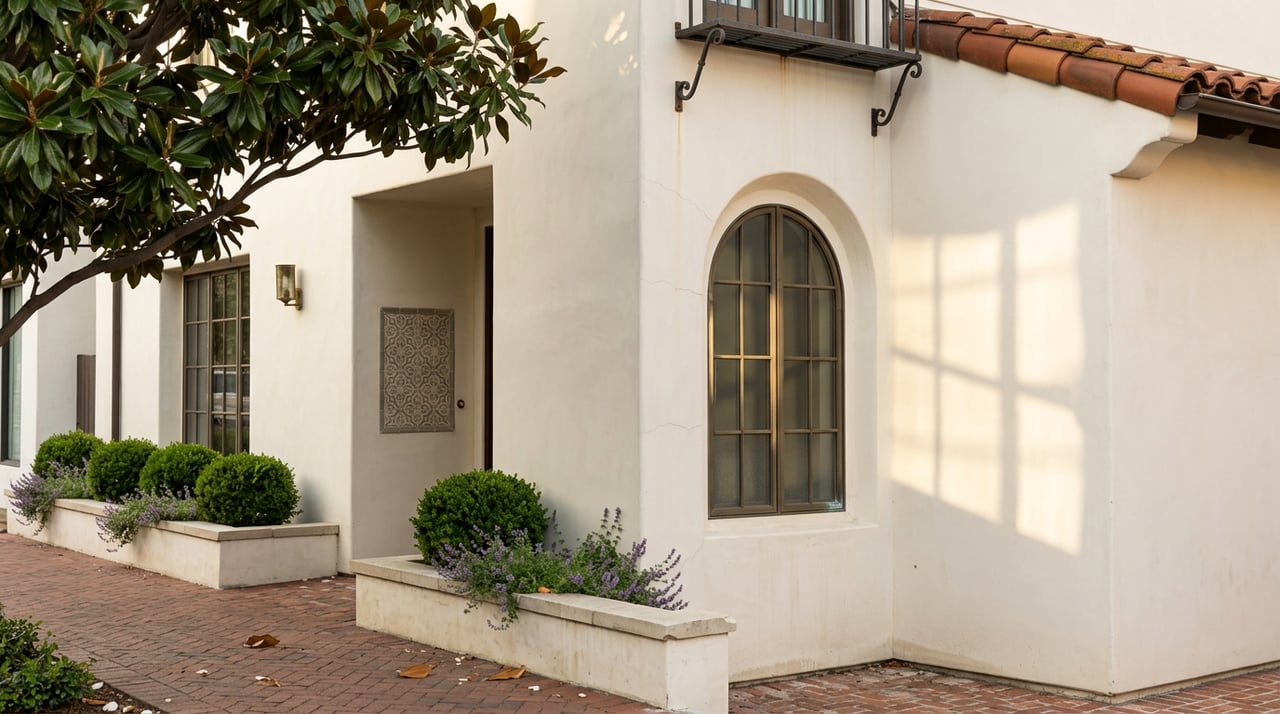
The council's approval of the master development plan reinforces that framing. Height increases were paired with design rules requiring new construction to match the Plaza's Spanish-revival style, and Gillon agreed to preserve character-contributing facades on buildings slated for redevelopment, including balconies along Mill Creek Parkway and tile work on the old Plaza Time Building. Councilwoman Andrea Bough, who championed the plan, argued the district needs density to reverse a real decline rather than to chase a trend.
The financing behind that revival tells a less flattering story. Gillon bought the Plaza in 2024 for $175.6 million, a fraction of the $660 million a previous owner paid roughly a decade earlier and about a fifth of that price adjusted for inflation. Since the purchase, Gillon has appealed the county's property assessment to cut its tax bill by close to 40 percent, while separately pursuing a 30-year property tax incentive through the Port Authority of Kansas City that would lock in payments near that same reduced baseline. Local officials who sit on the Tax Increment Financing Commission have called the sequencing a stealth incentive, because a lower assessed value now becomes the floor for three decades of future tax breaks.
The most candid assessment of the Plaza's underlying condition came from the agency asked to grant those breaks. Port KC's president and CEO, Jon Stephens, put it plainly to KCUR:
"People who have been in Kansas City for a while still think of it as this kind of elite, upscale asset. Something that I think people haven't always acknowledged is that it is a depreciating asset. It has continued to go downhill."
That is not a critic's talking point. It is the head of the agency negotiating the Plaza's own tax future describing the property the same way an appraiser might describe a building that needs a new roof. The financing structure only makes sense if you accept that premise: the district is being valued, and taxed, as a turnaround, not a jewel.
Lockton's decision is the clearest vote cast with real dollars rather than public comment. The firm has called the Plaza home since 2000, occupying the Valencia Place tower for a quarter century, and its move is not a downsizing. The new Hallbrook North campus at I-435 and State Line Road will anchor a $765 million mixed-use development on 34 acres, built around a 12-story, roughly 450,000-square-foot office tower with a second phase adding another 225,000 square feet. Groundbreaking happened in May 2026, with move-in targeted for 2030, and Lockton has said the relocation will add more than 200 jobs on top of its current headcount.
Leawood approved its first tax-increment financing agreement ever to help land the project, tied to Lockton or an affiliate signing a lease by the end of 2026. Mayor Marc Elkins called it proof that Leawood is "open for business." It is a smaller, more targeted incentive than the one still pending for the Plaza, aimed at a single confirmed employer rather than a district-wide redevelopment with no signed office tenants yet lined up to fill the new towers.
| Country Club Plaza | Leawood / Hallbrook North | |
|---|---|---|
| Investment size | About $1.5 billion, no confirmed office anchor tenant | $765 million, anchored by a signed 1,500-employee tenant |
| Incentive tool | 30-year property tax exemption still pending at Port KC, plus a separate TIF for infrastructure | City's first-ever TIF, contingent on Lockton signing a lease by year-end 2026 |
| Recent assessed value | Purchased for $175.6 million in 2024, down from $660 million about a decade earlier | New construction on previously undeveloped land |
| Office anchor status | Losing its largest tenant (Lockton, ~1,500 jobs) by 2030 | Gaining that same tenant plus 200+ new jobs |
| Public reaction | Pushback from Kansas City Public Schools and Historic Kansas City over height and revenue-sharing | City leadership actively courting the project as an economic win |
The height increases the Plaza just won, up to 178 feet on sites including the old Halls department store block and the Commerce Bank block, are also higher than any existing structure in the district. The Giralda tower, the Plaza's tallest current landmark, tops out at 138 feet. Historic Kansas City has warned that approving heights above that benchmark sets a precedent property owners just outside the district, including on residential blocks that border it, will likely cite when they seek similar allowances of their own.
None of this means the Plaza is a bad place to own property or that Leawood is automatically the safer bet. It means the two headlines you'll see most often, an exciting redevelopment on one side and a corporate relocation on the other, are describing the same regional capital shift from two different angles. If you're comparing a condo near the Plaza to a home in a Leawood neighborhood like Hallbrook, the more useful questions are the ones the press releases don't answer directly:
These are the kinds of questions that separate a district genuinely being rebuilt from one being financially engineered to look rebuilt on paper. Both can produce nicer restaurants in the short term. Only one produces the kind of stable daytime population that tends to support home values over a decade rather than a news cycle.
Does the height increase affect home values on the residential streets that border the Plaza? That is the open question Historic Kansas City and neighborhood advocates raised throughout the approval process. The plan applies to four commercial blocks inside the district, not to adjacent residential zoning, but preservation groups have flagged that the precedent could invite similar requests nearby. Anyone buying close to those boundary blocks should ask what, if anything, is different about the zoning on their specific street.
Will the Plaza's tax incentive raise my property taxes? A TIF redirects growth in tax revenue above an agreed baseline toward a specific project's infrastructure costs rather than raising anyone's individual tax rate directly. The pending Port KC exemption works differently, reducing what the Plaza's owner pays over 30 years, which is why school and library officials argued it shifts the tax burden rather than creating new revenue.
When will construction actually start? Gillon has said it wants to begin in 2026, but the approved plan is preliminary. Individual buildings still need separate design review from the City Plan Commission before anything taller than what exists today can break ground.
If you're trying to figure out what any of this means for a specific address, whether it's a condo three blocks from Ward Parkway or a lot near the new Hallbrook North perimeter, that's a conversation worth having before you make an offer, not after. The Gamble Group tracks these filings as they move through City Hall and Port KC, and we're glad to walk through what a given parcel's zoning and incentive status actually means for your purchase. Schedule a Consultation and we'll pull the specifics for the block you're considering.
Stay up to date on the latest real estate trends.